
You've committed to a goal race. Whether it's your first 10km, a half marathon milestone, or a full marathon, you've got a plan, a training schedule, and the discipline to get out the door when motivation is low. But somewhere between the long runs and the tempo sessions, most distance runners meet the same unwelcome companion: injury. EMS training won't replace your running programme. What it can do is make that programme more resilient, and keep you on the road when your body would otherwise be forcing you off it.
The hidden cost of distance running
Distance running is a study in managed stress. You push the body hard enough to stimulate adaptation, then recover enough to absorb it. Get the balance right and you get fitter. Get it wrong, even slightly, and you get injured. The problem is that running is a high-repetition, single-plane movement. Every kilometre applies the same mechanical forces to the same structures, over and over again. The muscles that don't get adequately loaded, your glutes, deep hip stabilisers, core, and posterior chain, gradually fall behind the demands being placed on them. That imbalance is a common contributing factor in many running injuries. ITB syndrome, knee pain, hip flexor tightness, lower back issues, glute weakness. These aren't just bad luck. They're often the predictable result of running volume without complementary strength work to support it. And the longer the race you're training for, the greater that risk becomes.
Where EMS fits in
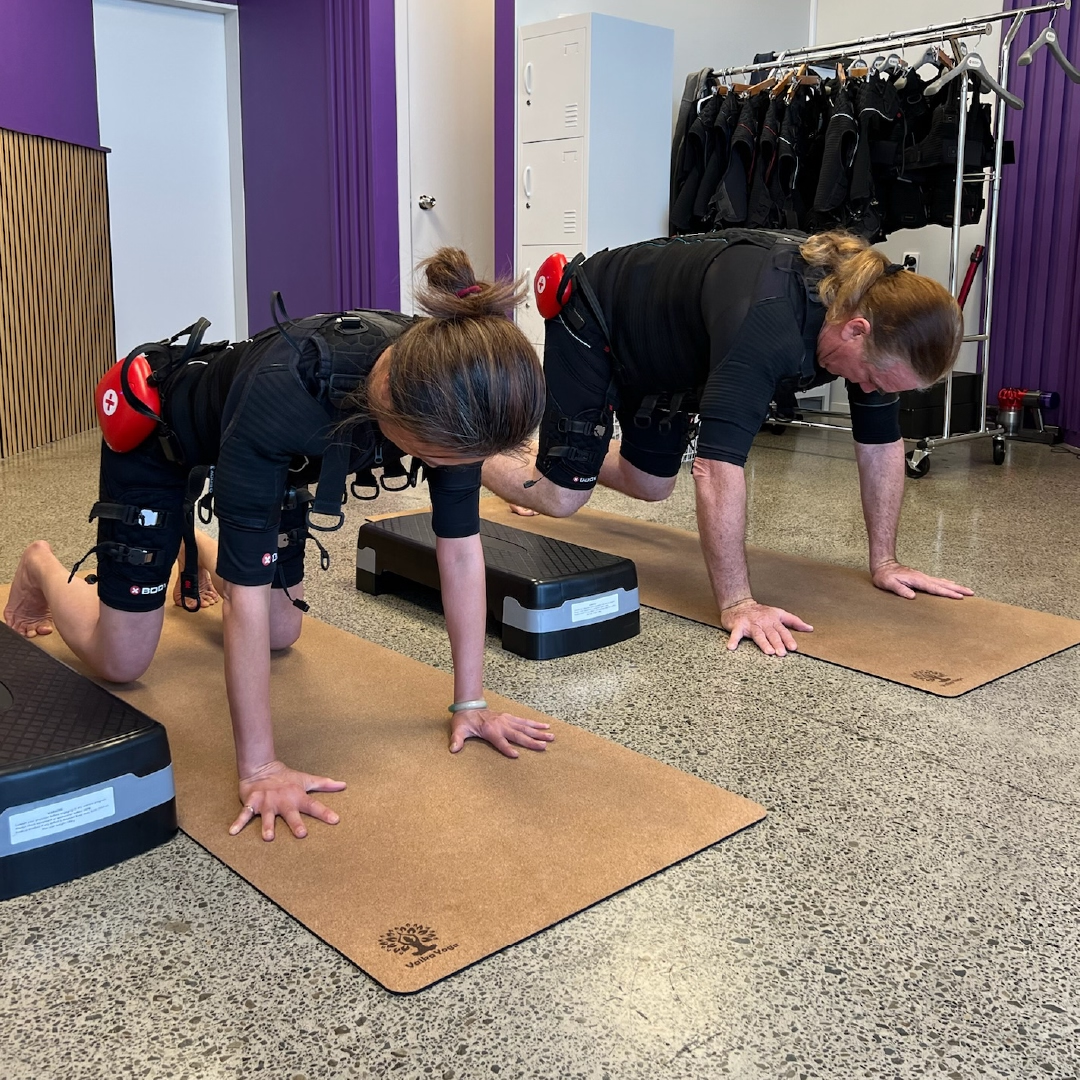
Most runners know they should be doing strength training. Most don't do nearly enough of it. It's time-consuming, it competes with running sessions for recovery, and when training load is high, it's usually the first thing dropped. This is exactly where EMS changes the equation. A single 20-minute EMS session activates up to 90% of muscle fibres across your back, core, glutes, and upper legs simultaneously, targeting muscles that are often undertrained or under-recruited in running, and that most injuries can ofter be linked to. And it does this with lower joint load and typically less overall fatigue or recovery cost of a conventional strength session. For a runner in the middle of a training block, that matters enormously. You can add genuine, targeted strength work without compromising your next run. One session per week alongside your existing routine is typically all it takes, and most runners don't need to change anything else to make it fit.
Injury prevention: the main reason runners come to Breflex
The most common running injuries share a common root: certain muscle groups aren't strong enough, or don't fire correctly, to handle the repetitive demands of distance running. When they fatigue or underperform, other structures compensate, and that's when things start to break down. EMS directly targets the key areas. Glutes and hip stabilisers, where weakness is frequently linked to ITB syndrome, runner's knee, and hip pain. The core and posterior chain, which maintain form under fatigue and protect the lower back. And the hip flexors and upper legs, which bear the most load across the gait cycle and are most prone to fatigue-related breakdown as race distance increases. Building genuine strength in these areas consistently throughout your training block creates a real buffer against the injuries that typically show up when cumulative fatigue is at its peak.
If you're already injured
If you're reading this mid-injury, the priority shifts but EMS remains relevant. Because the electrical impulses activate muscle without requiring heavy load or impact, in many cases you can maintain strength and conditioning in the areas surrounding an injury site while it heals. For a runner dealing with a knee issue, hip problem, or lower back flare-up, the weeks you'd otherwise spend losing fitness can instead be weeks of structured, low-impact conditioning. The EMS suit at Breflex covers from the upper legs upward, making it well suited to the majority of running-related injury sites. As always, we recommend consulting your GP or physiotherapist before using EMS for rehabilitation, and we complete a full health screening with every new client before their first session.
The performance side
Injury prevention is the lead reason to add EMS to a running programme. But for runners who stay consistent with it across a training block, the performance benefits become hard to ignore. Stronger glutes and posterior chain can significantly improve running economy, meaning more propulsion with less effort. Better core stability means your form holds together late in a race when fatigue typically causes it to fall apart. And improved neuromuscular activation, your ability to recruit more muscle fibres more efficiently, supports both speed and endurance over time. None of this replaces the running itself. But it amplifies what you get from every kilometre you put in.
How to fit EMS into your training block
The most common concern runners have is whether EMS will interfere with their training. With availability 7 days a week and each EMS training session personalised to your needs, Breflex designs this not to interfere but support your running. Here's how most runners integrate it: Early in the block, one to two sessions per week builds the strength foundation. Mid-block, one session per week scheduled after a lighter running day keeps things ticking over without competing with key sessions. In the taper, one session at moderate intensity or a recovery session keeps the supporting musculature primed without adding unnecessary fatigue before race day. After the race, a session with the recovery impulse can help you recover faster post run. One important note from the Breflex FAQ: there must be at least 48 hours between EMS sessions to allow your muscles to recover properly. Your trainer will help you schedule around your running programme so the two work together, not against each other.
Is EMS right for your training?
You're likely a strong candidate if you are:
The full list of contraindications is on the Breflex FAQ page.
If you're unsure, reach out before you book and the team will help you work it out.
Ready to run stronger?
Talk to the team at Breflex Silverdale about how EMS training can complement your current running programme.
Whether you're lining up for your first 10km or chasing a marathon PB, we'd love to help you get there in one piece.
Get in touch with Breflex